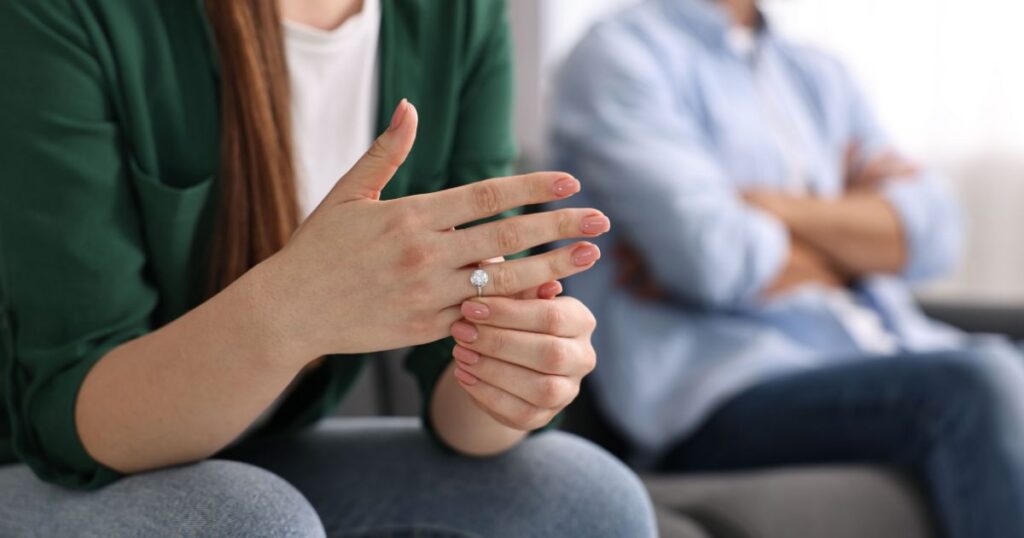


If you have been thinking about couples therapy, you may have talked yourself out of it once or twice. Perhaps you told yourself that things are not bad enough yet, that you should be able to work it out on your own, or that therapy is only for couples whose relationship is falling apart.
Many couples wait too long before getting help. Without help, small misunderstandings may grow into ongoing conflicts. Emotional distance and resentments may grow, and physical intimacy can diminish. By the time a couple starts therapy, both partners often wonder how things got to this point.
Therapists at Pacific Behavioral Healthcare support individuals and couples at all stages of intimate relationships, from new relationships to those lasting decades. This article answers common questions about starting couples therapy and explains what to expect from the process.
Couples Therapy vs. Marriage Counseling: Is There Really a Difference?
People sometimes ask whether couples therapy and marriage counseling are different services.
These terms essentially describe the same thing. From a technical standpoint, marriage counseling usually refers to therapy with legally married couples, while couples therapy can include any committed relationship. However, therapists approach both the same way, with the goal of strengthening the intimate relationship.
Therapists at Pacific Behavioral Healthcare work with many forms of intimate relationships and different levels of commitment, including:
- Married couples
- Long-term partners who have chosen not to marry
- Couples who are in a dating relationship
- Partners in consensual nonmonogamous or polyamorous relationships
- Couples working through engagement or premarital planning
- Couples with blended families or moving through major life transitions
No matter what stage or type of relationship you’re in, the key is to find a therapist who understands your situation, your concerns, and the goals you want to work on together.
How Does Couples Therapy Actually Work?
Couples therapy can look different depending on a therapist’s clinical background and training, as well as a couple’s specific needs. That is okay, and perhaps even necessary. That is normal and perhaps even helpful. Research shows that several proven approaches can improve relationship satisfaction and other important outcomes (Rathgeber et al., 2019; Roddy et al., 2020).
Some couples therapists focus on attachment theory, while others use more structured methods. Many blend different approaches to understand both the relationship and each person involved.
No matter which therapy model is used, a main goal is to help partners notice the patterns that cause problems. Rather than focusing on who is right, therapy looks at what happens between two people when they feel hurt, disconnected, criticized, afraid, or misunderstood.
Couples therapy usually includes several intervention components.
Understanding the Pattern
Most couples develop recognizable communication and behavioral patterns in the ways they respond to conflict or disconnection.
One person might try to share their feelings while the other pulls away. Sometimes, one partner gets more emotional while the other becomes quiet or withdraws. These reactions can feel personal, even though both people are part of the same pattern.
In therapy, couples can slow these interactions down enough to see what is actually happening. What feels like “my partner doesn’t care” may look very different once both people understand the cycle they have fallen into.
Understanding What Drives It
Recurring relationship conflict is often about more than the immediate disagreement. Attachment histories, unmet emotional needs, previous relationship injuries, communication styles, family background, cultural expectations, and past experiences can all shape how partners respond to each other.
Couples therapy helps partners better understand these underlying factors and how they affect the relationship.
Building Something New
Identifying the patterns and what drives them is only part of the process.
Therapy also helps couples find new ways to talk, solve problems, share their needs, and support each other during tough times. The goal is to build more emotional safety, connection, intimacy, and understanding.
Therapy is a team effort. The therapist helps both partners understand what’s going on and supports changes that fit their unique relationship, rather than using a one-size-fits-all approach.
Couples Therapy Is Also About Caring for Yourself and Your Partner
Relationships can benefit from the same intentional care we give other important parts of our lives. Couples therapy creates dedicated time to understand each other better, talk about changing needs, and stay connected as life evolves.
It can also help partners balance caring for their own needs with being present for each other. Therapy does not have to begin with a crisis. Couples Therapy and the Art of Caring for Yourself and Your Partner explores this balance further and offers another perspective on caring for a relationship that matters to you.
What Can You Expect During Your First Couples Therapy Session?
Going to your first couples therapy session can feel a bit nerve-wracking, especially if neither of you has been to therapy before.
The therapist will start by getting to know each of you, your relationship history, why you came to therapy, and what you hope will change. They will likely ask about how your relationship began and what brought you together. They will probably ask about what has changed over time and what concerns matter most to each of you. They’ll also look for strengths in your relationship. Even couples facing big challenges usually have positive patterns, caring moments, or connections worth noticing.
The first few sessions also give both partners a chance to see if the therapist’s style feels right. It’s important to feel heard, respected, and comfortable with your therapist. Research shows that the relationship each partner builds with the therapist is a key part of successful therapy (Knobloch-Fedders et al., 2004; Quirk et al., 2021).
If it doesn’t feel like the right fit, you can talk about it or consider finding another therapist who might be a better match.
How Long Does Couples Therapy Typically Last?
There is no set timeline for couples therapy. Most couples meet with their therapist once a week, but this can vary based on your needs and the therapist’s approach. Some couples come for a short time to work on a specific issue, while others need longer-term support for deeper patterns, trust issues, betrayal, trauma, or big life changes.
The length of therapy may depend on:
- The goals both partners want to work toward
- The nature and complexity of the concerns
- How long particular patterns have been present
- Each partner’s readiness to participate in the work
- Individual concerns affecting the relationship
Having clear goals for what you want to accomplish together in couples therapy helps guide the process. You and your partner can talk about and adjust these goals with your therapist as things change over time.
The goal isn’t to stay in therapy forever. Instead, the focus is on what you want to understand or change together.
Research shows that the benefits of couples therapy can last after treatment ends. One large study found that most couples kept their progress during follow-up, though results can vary (Roddy et al., 2020). Another study found that many couples with serious problems still improved five years after therapy (Christensen et al., 2010).
Is Couples Therapy Effective for All Types of Relationships?
Couples therapy can help all kinds of relationships, including dating, engaged, married, long-term unmarried, LGBTQ+, and consensually nonmonogamous couples.
Different relationships can bring different concerns to therapy. Dating or engaged couples may be working through questions about commitment, compatibility, sex, finances, or having children. Long-term couples may struggle with recurring conflict, emotional distance, differences in sexual desire, parenting stress, or rebuilding trust after a betrayal.
LGBTQ+ couples may also be navigating identity, family acceptance, or coming out. People in open or polyamorous relationships may want help with jealousy, boundaries, agreements, outside partners, or differences in how each person feels about nonmonogamy.
Good couples therapy doesn’t expect every relationship to look the same. It helps partners understand what’s happening between them, communicate better, strengthen their connection, and work toward goals that fit their relationship.
What If Your Partner Is Reluctant to Go to Therapy?
This is a common concern. One partner might feel ready for therapy, while the other feels unsure, defensive, skeptical, or anxious about what will happen.
If one partner isn’t ready to attend, some therapists offer sessions with just one person to explore concerns and work on relationship goals. Starting solo can sometimes make it easier for both partners to take the first step toward getting support together.
It’s normal to hesitate. Couples therapy asks people to be open with someone new. It can mean talking about hard topics, hearing tough feedback, or facing issues that both partners may have avoided.
If your partner is hesitant, being curious is often more helpful than trying to push them.
A few things may help:
- Ask what specifically feels uncomfortable or concerning
- Suggest a brief consultation with a therapist before scheduling
- Talk about what you hope therapy could help with rather than framing the other person as the problem
- Give your partner some space to think about the decision when possible
The therapist isn’t there to pick sides. Their job is to understand your relationship and help both partners work toward their therapy goals.
Pacific Behavioral Healthcare therapists work to create a setting where both partners feel heard, respected, and able to take part in the process.
Different Approaches to Couples Therapy
Some people come to couples therapy already knowing about certain models, like the Gottman Method or Emotionally Focused Couples Therapy.
Pacific Behavioral Healthcare therapists draw from several research-supported and clinically informed approaches, including:
- Gottman Method
- Emotionally Focused Couples Therapy
- Attachment-based approaches
- Integrative models that draw from multiple areas of training
Different couples may need different therapy approaches. Research supports several types of couples therapy, rather than showing that one method works for everyone. For example, a large study found that both behavioral couple therapy and Emotionally Focused Couples Therapy help reduce relationship distress, with no clear difference between them (Rathgeber et al., 2019).
One couple might benefit from a structured approach, while another might need more focus on attachment, trauma, sexuality, emotional regulation, or individual mental health.
A skilled couples therapist should be able to draw from different approaches rather than trying to fit every couple into the same model. Treatment should reflect what is actually contributing to the problems in the relationship.
If you prefer a certain therapy approach, it’s okay to ask about it during your consultation.
You Do Not Need to Be in Crisis to Start Couples Therapy
Many couples wait until their relationship feels very strained before seeking help.
Some couples come after infidelity. Others have been sleeping apart, arguing often, avoiding tough conversations, or living with resentment that has built up over time.
Couples therapy can still help during times of serious distress. Research shows that even couples with long-term problems or infidelity can make substantial progress in therapy that is sustained over time (Christensen et al., 2010; Atkins et al., 2010).
Therapy can be very helpful before problems become significant challenges. It can give couples a chance to notice patterns before they worsen, handle life changes more smoothly, improve communication, and better understand each other’s needs.
Research on marriage and relationship education shows that couples don’t need to wait for a crisis to benefit from support. Studies have found that preventive programs can improve communication, though results for overall satisfaction are mixed (Blanchard et al., 2009; Fawcett et al., 2010).
People come to couples therapy for many reasons that have little to do with crisis, including:
- Preparing for marriage
- Adjusting to becoming parents
- Dealing with a move or career change
- Reconnecting after years together
- Improving the way conflict is handled
- Working through stress that has begun affecting the relationship
- Strengthening emotional or sexual intimacy
- Getting outside support during an important transition
Couples often start therapy during transitions, periods of disconnection, or simply because they have noticed patterns they do not want to continue.
Seeking help early can give you more room to understand and change those patterns before they become entrenched.
Considering Couples Therapy? Contact Pacific Behavioral Healthcare
Pacific Behavioral Healthcare provides couples therapy in Seattle and Bellevue and online throughout Washington State.
Our therapists work with couples facing relationship conflict, communication problems, sexual and emotional disconnection, betrayal, major life transitions, and many other concerns.
You do not need to decide whether your relationship is “bad enough” for therapy. If something between you is not working, or you want a stronger relationship, that is enough reason to consider talking with a couples therapist.
If you are considering couples therapy, contact PBH to tell us a little about what you are looking for and request an appointment.
References
Atkins, D. C., Marín, R. A., Lo, T. T. Y., Klann, N., & Hahlweg, K. (2010). Outcomes of couples with infidelity in a community-based sample of couple therapy. Journal of Family Psychology, 24(2), 212–216. https://doi.org/10.1037/a0018789
Blanchard, V. L., Hawkins, A. J., Baldwin, S. A., & Fawcett, E. B. (2009). Investigating the effects of marriage and relationship education on couples’ communication skills: A meta-analytic study. Journal of Family Psychology, 23(2), 203–214. https://doi.org/10.1037/a0015211
Christensen, A., Atkins, D. C., Baucom, B., & Yi, J. (2010). Marital status and satisfaction five years following a randomized clinical trial comparing traditional versus integrative behavioral couple therapy. Journal of Consulting and Clinical Psychology, 78(2), 225–235. https://doi.org/10.1037/a0018132
Fawcett, E. B., Hawkins, A. J., Blanchard, V. L., & Carroll, J. S. (2010). Do premarital education programs really work? A meta-analytic study. Family Relations, 59(3), 232–239. https://doi.org/10.1111/j.1741-3729.2010.00598.x
Knobloch-Fedders, L. M., Pinsof, W. M., & Mann, B. J. (2004). The formation of the therapeutic alliance in couple therapy. Family Process, 43(4), 425–442. https://doi.org/10.1111/j.1545-5300.2004.00032.x
Quirk, K., Owen, J., Inch, L. J., France, T., & Bergen, C. (2021). The alliance-outcome association in couple therapy: A common fate model. Family Process, 60(4), 1255–1270. https://doi.org/10.1111/famp.12666
Rathgeber, M., Bürkner, P.-C., Schiller, E.-M., & Holling, H. (2019). The efficacy of emotionally focused couples therapy and behavioral couples therapy: A meta-analysis. Journal of Marital and Family Therapy, 45(3), 447–463. https://doi.org/10.1111/jmft.12336
Roddy, M. K., Walsh, L. M., Rothman, K., Hatch, S. G., & Doss, B. D. (2020). Meta-analysis of couple therapy: Effects across outcomes, designs, timeframes, and other moderators. Journal of Consulting and Clinical Psychology, 88(7), 583–596. https://doi.org/10.1037/ccp0000514